
Lamborghini Urus SE Performante: the Fastest Super-SUV
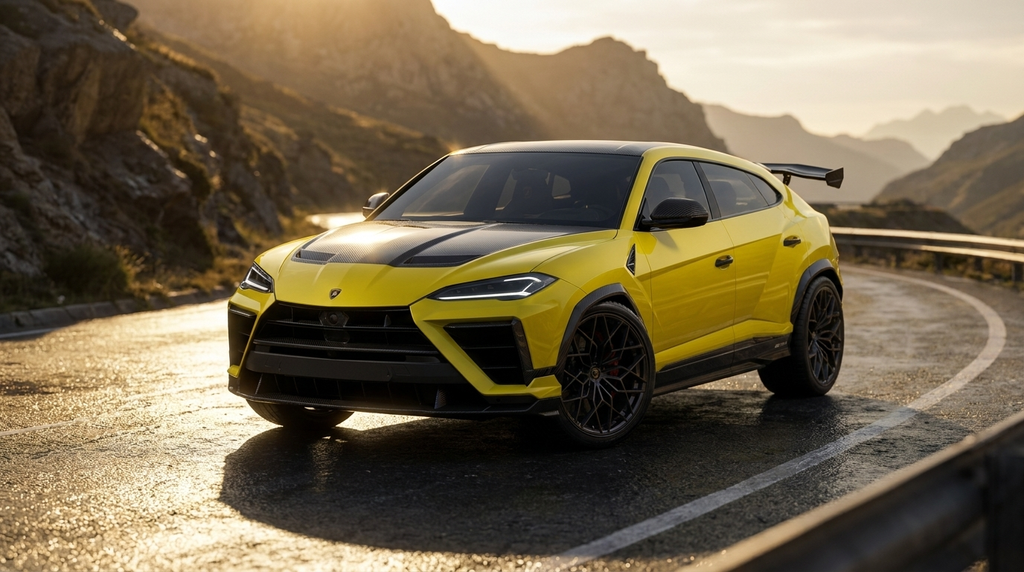
Lamborghini Just Built
the Fastest Super-SUV
on Earth:
The Urus SE Performante
Revealed yesterday. 800 horsepower. 3.3 seconds to 62 mph. 70 pounds lighter than the standard SE. Carbon fiber on the hood, roof and side skirts. An Akrapovič exhaust. 16% more downforce than the previous Performante. 23% more than the standard Urus SE. Lamborghini calls it the fastest Super SUV in the world. The numbers suggest they are not wrong.
The original Urus launched in 2018 and changed what a performance SUV could be. The Performante trim followed with more power and aggression. Then in 2024 the Urus SE arrived with the PHEV powertrain. Now the logical conclusion: the SE Performante, which takes the hybrid system and wrings every possible performance metric out of it. 800 horsepower. A diet of 70 pounds. And a claim that Lamborghini backs with the stopwatch.
World premiere.
July 1, 2026.
The fastest SUV
ever built.
Yesterday, Lamborghini revealed the Urus SE Performante: the most powerful, fastest and lightest Urus ever produced. It takes the plug-in hybrid powertrain introduced with the Urus SE and pushes every performance dimension further. More horsepower. More torque. Less weight. More downforce. Quicker reaction times. A wider front end for better aerodynamics and cooling. And the Akrapovič exhaust system that Lamborghini performance models have used for years, now tuned specifically for the hybrid drivetrain's delivery characteristics.
Lamborghini is unambiguous about what it is building. "The fastest Super SUV in the world" is the company's own description. The 0-62 mph time of 3.3 seconds and the 194 mph top speed are the numbers that support that claim. No production SUV currently available reaches 62 mph in less time or continues beyond 194 mph. The Urus SE Performante does both.
With the Urus SE PHEV replacing the standard version, it was only a matter of time before the new Performante showed up., Motor1, July 2026
V8 twin-turbo.
Electric motor.
800 horsepower.
The Urus SE Performante uses the same twin-turbocharged 4.0-litre V8 plug-in hybrid system as the standard Urus SE, but tuned for additional output. The combined system produces 800 horsepower and 738 lb-ft of torque. That is 11 more horsepower and 37 additional lb-ft compared to the standard SE. The eight-speed automatic transmission and permanent all-wheel drive system carry over, now managing a more aggressive power delivery profile calibrated for Performante-level dynamic targets.
The electric motor retains the full electric driving capability of the standard SE: more than 60 kilometres of zero-emissions range for urban use, with the full hybrid system available immediately when performance is demanded. The Performante's engineering philosophy is not to choose between electrification and performance but to use both systems to achieve numbers that neither alone could reach. The 800 horsepower combined output reflects exactly that approach.
70 pounds.
Removed
with purpose.
In a vehicle that weighs 5,452 pounds, removing 70 pounds sounds marginal. It is not. Every pound removed from a performance vehicle affects handling, braking, acceleration and cornering with a precision that total weight obscures. Lamborghini's engineers identified four specific sources of mass reduction and attacked each one deliberately.
The carbon fiber deployment is the most visible of these changes. The hood, roof and side skirts are all carbon fibre on the SE Performante, replacing the steel or aluminium components of the standard SE. The Akrapovič exhaust saves 22 pounds while simultaneously improving the acoustic character of the V8 hybrid system. The Integrated Power Brake system, lighter than the conventional setup it replaces, also improves pedal feel and response consistency under hard braking, which matters on track. The NVH package reduction is the least intuitive: removing some acoustic insulation to save weight, accepting slightly more mechanical sound in the cabin in exchange for mass reduction.
16% more
downforce.
23% vs standard SE.
Downforce on an SUV matters differently than on a sports car. The mass is higher, the centre of gravity is higher, and the aerodynamic surfaces are larger. What a downforce increase does to an SUV at speed is the same thing it does to a race car: it presses the tyres harder into the road surface, increasing grip and allowing the suspension to maintain contact rather than skipping. At 194 mph, the Urus SE Performante's carbon fibre rear spoiler and diffusers are generating 16% more downforce than the previous Performante and 23% more than the standard SE.
The wider front end is the most structurally significant aerodynamic change. It is not purely cosmetic. The wider front architecture improves airflow into the battery cooling system, which is critical for maintaining consistent hybrid system performance during extended high-speed or track use. A PHEV system that overheats its battery reduces available electric output and therefore total combined power. The wider front end ensures the battery stays within its operating temperature range regardless of how the car is driven. The 3% reduction in total aerodynamic drag is the secondary benefit: less drag at any given speed means less fuel consumed to maintain it.
The Urus SE Performante is 6 percent quicker when maneuvering, and has a 12-percent quicker reaction time. Grip improves by up to 6 percent with the new Pirelli P Zero tires., Motor1, July 2026
Performance.
Electrification.
Not a trade-off.
The Urus SE Performante arrives at a moment when the automotive industry's relationship with electrification is being actively renegotiated. Porsche has reversed its EV targets and is reinstating combustion SUVs. BMW revealed an electric M3 concept at Le Mans while confirming a combustion version follows in 2028. GM invested in a new V8 generation. The pattern of 2026 is not the death of performance or the abandonment of electrification. It is the industry discovering that both can coexist, and in some cases the combination produces results that neither alone could achieve.
The Urus SE Performante is the clearest example of that thesis. The PHEV powertrain does not compromise the Lamborghini driving experience. It extends it: the electric motor provides instant torque fill that a pure combustion engine cannot match at low revs, the V8 provides the power and acoustic character at high revs, and the combined 800 horsepower figure is higher than any pure combustion Urus ever produced. Lamborghini built the fastest SUV in history by embracing the electric motor rather than fighting it. That is the story of the Urus SE Performante.
The benchmark
just moved.
Again.
The Urus SE Performante matters beyond its own specifications. It is a statement about the direction of performance SUV development for the next decade. Every brand competing in the super-SUV segment, which is now among the highest-volume segments in the luxury car market, has to respond to a vehicle that does 0-62 in 3.3 seconds, tops out at 194 mph, generates 16% more downforce than its predecessor, and does all of this as a plug-in hybrid with 37 miles of electric range.
The response from Bentley, Porsche, Aston Martin, Ferrari and Mercedes-AMG will define the super-SUV category for years. For now, the benchmark belongs to Lamborghini. The price, expected around $300,000, reflects exactly the position the car occupies: between accessible performance and genuine supercar territory. At that price, buyers are not choosing between practicality and performance. They are choosing the fastest SUV on earth and getting both.
The SUV wars
are heating up.
Pick your legend.
The Urus SE Performante just redefined what a performance SUV can be. At tourismobrick.com, the performance machines that defined their eras are waiting to be built: the Mercedes G63 AMG, the Porsche GT3 RS, the BMW M3 E46 GTR. 350 pieces. Zero stickers. Permanent on your desk.
Build a legend now →