
Porsche 911 GT3 S/C: The First-Ever GT3 Cabriolet Is Here
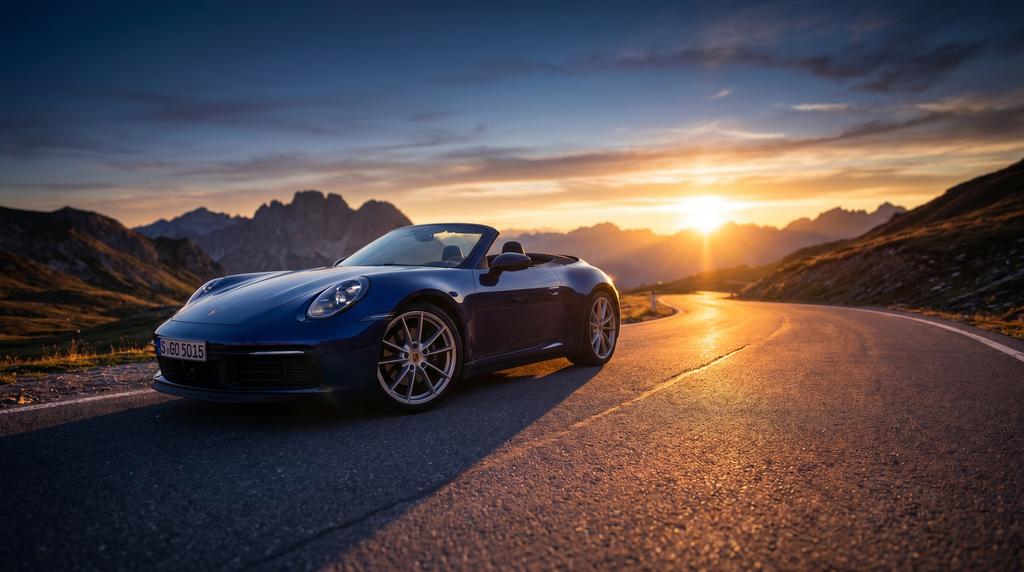
Porsche 911 GT3 S/C :
The First-Ever GT3
Cabriolet Is Here
Porsche has just revealed the most exciting open-top car in its current lineup: the 911 GT3 S/C. Manual gearbox only. 510 naturally aspirated horsepower. A roof that folds at 37 mph. And a name that will mean something to every driving enthusiast on the planet.
The 911 GT3 S/C is not just a new model. It is a historic one. For the first time in more than 25 years of GT3 production, Porsche has built an open-top GT3. No turbos. No automatic option. No compromises. Just a flat-six that screams to 9,000 rpm with the sky above your head.
25 years
in the making.
A first.
Since the 911 GT3 was born in 1999, it has always been a coupé. A hardtop. A closed car. The whole philosophy of the GT3 was about rigidity, precision and focus: a soft roof would compromise everything the car stood for. For 25 years, nobody at Porsche seriously considered building a GT3 cabriolet. Until now.
The Porsche 911 GT3 S/C is the first production open-top GT3 in history. Its name is a nod to the legendary 911 S/T, one of the most revered lightweight Porsches ever made. And its specification reads like a letter to every driving purist who ever dreamed of feeling a naturally aspirated flat-six at 9,000 rpm with nothing between them and the sky.
The emotive powertrain of the 911 GT3 comes into its own even more emphatically when driving with the roof down on winding country roads., Frank Moser, Head of the 911 and 718 model lines at Porsche
The car is available to order now. It is not a limited edition. Porsche has made the decision to keep it in the regular lineup, which means this is not a collector's special: it is a proper, everyday-usable open-top GT3 for those who want the best of both worlds.
510 hp.
9,000 rpm.
No turbo.
Under the engine lid of the GT3 S/C sits the same 4.0-litre naturally aspirated flat-six as in the GT3 coupé. 510 hp. A rev ceiling of 9,000 rpm. The howl of a pure racing engine with no turbocharger to blunt the response, no forced induction to blur the connection between right foot and rear wheels. It is, by almost any measure, the finest-sounding production engine available today.
Crucially, Porsche has made the GT3 S/C available exclusively with the six-speed manual gearbox. Not as a no-cost option. Not as an alternative to the PDK. The manual is the only transmission. This is a deliberate and significant statement. In a world where every performance car is pushing toward automation, Porsche is saying that the GT3 S/C is not for people who want a fast car. It is for people who want to drive.
Open at
37 mph.
Magnesium frame.
Building a cabriolet around the GT3's philosophy required one critical challenge: the roof system had to be as close to invisible as possible. It could not add significant weight. It could not compromise airflow. And it had to operate intuitively, without pulling the driver's attention away from the road.
Porsche's solution is a fully automatic, electrically operated fabric roof incorporating lightweight magnesium elements: the same material used in Porsche's racing programme to save every possible gram. The roof can be opened or closed at speeds up to 60 km/h (37 mph), uses a heated rigid glass rear screen, and can be operated from the vehicle key for convenience.
An integral electrically-powered wind deflector deploys automatically to reduce buffeting at speed. The result is a cabriolet that feels genuinely composed at motorway speeds with the roof down, rather than exhausting to drive as so many convertibles become above 80 mph. At 1,497 kg, the GT3 S/C is the lightest open-top model in the entire current 911 range.
Wings from
the S/T.
Pure two-seater.
The GT3 S/C wears the distinctive wide bodywork and doors of the 911 S/T combined with a black windscreen surround: a combination that Porsche says gives the car an unmistakable look even among the 911 family. The rear wing is the same full GT3-specification unit as on the coupé, making clear that this car is not a softer, touristic version of the GT3 experience. It is the GT3 experience, open to the sky.
Inside, the GT3 S/C is the only open-top car in the current 911 range built as a pure two-seater. There are no rear seats. The space behind the front occupants is occupied by the roof mechanism and a lightweight structure designed to keep the car as focused and uncluttered as possible. The lightweight door panels carry door opening loops rather than full door pulls, saving weight and referencing the S/T directly.
The 911 GT3 S/C is reminiscent of the 911 Speedster from 2019, but unlike the Speedster, it is not a limited edition. This car will stay in the lineup.
Optional lightweight sport bucket seats save more than 7.5 kg compared to standard 911 seats. The lithium-ion starter battery has been refined further versus the coupé, saving an additional half a kilogram. Every gram, every ounce, counts to Porsche.
Where it
fits in
the 911 family
The GT3 S/C lands in a 2026 Porsche 911 lineup that has never been more comprehensive or more powerful. At the top sits the 911 Turbo S Cabriolet with its T-Hybrid system delivering 701 hp, a 0-60 time of 2.4 seconds and a price starting north of £200,000. Below that, the GT3 S/C occupies a very different but equally compelling position: less power, less technology, more connection.
The Carrera Cabriolet range starts at $146,000 and covers everything from the base 388 hp twin-turbo to the GTS variant. The GT3 S/C sits above all of them in terms of driver engagement and below the Turbo S in terms of outright performance. It is not trying to compete with the Turbo S. It is trying to do something the Turbo S cannot: make you feel every rev, every gear, every turn of the wheel as directly as if the car had been built around you specifically.
Porsche has also created an exclusive watch to accompany the car: the Chronograph 911 GT3 S/C, with a titanium case, yellow accents and a winding rotor modelled on the car's magnesium forged wheels. The dial colour ring is available in every exterior colour of the car, including Paint to Sample options.
The last
of its
kind?
The Porsche 911 GT3 S/C arrives at a precise and uncomfortable moment in automotive history. Porsche is navigating US trade tariffs, slower Chinese sales, and has reversed its decision to go fully electric on the Boxster and Cayman. The engineering budgets that have produced cars like this are under pressure. The GT3 S/C may be, in time, recognised as one of the last examples of what Porsche can do when it prioritises the driver above all else.
A 510 hp naturally aspirated engine. A manual gearbox as the only option. A lightweight open body. No hybrid assist. No torque fill. No software doing the driving for you. Just the mechanical connection between engine, gearbox, tyres and driver that has made the 911 the benchmark sports car for six consecutive decades.
Soon, Porsche may be forced to cut the engineering budget afforded to the 911. All this potentially makes cars like the GT3 S/C one of the highest water marks in the history of the 911., Motoring Research
You may never own one. At its price point, very few people will. But understanding what the GT3 S/C represents: the pursuit of pure driving pleasure in a world that is rapidly moving away from it, makes it one of the most important cars of 2026. And that is worth knowing about, whether you drive one or not.
The GT3 makes
you dream?
Build it.
The 911 GT3 S/C starts at well over $200,000 and will end up in very few garages. But at tourismobrick.com, the Porsche GT3 RS is available as a brick building kit: four colours, one obsession. Same silhouette. Same rear wing. Same presence on your desk or shelf.
Our Race Cars collection is built for people who feel about cars the way the GT3 S/C was built: with no compromises and nothing left out.
Shop our Porsche brick kits →