
The Car You Wanted at 20 Is Still Available. Not the Way You Expected
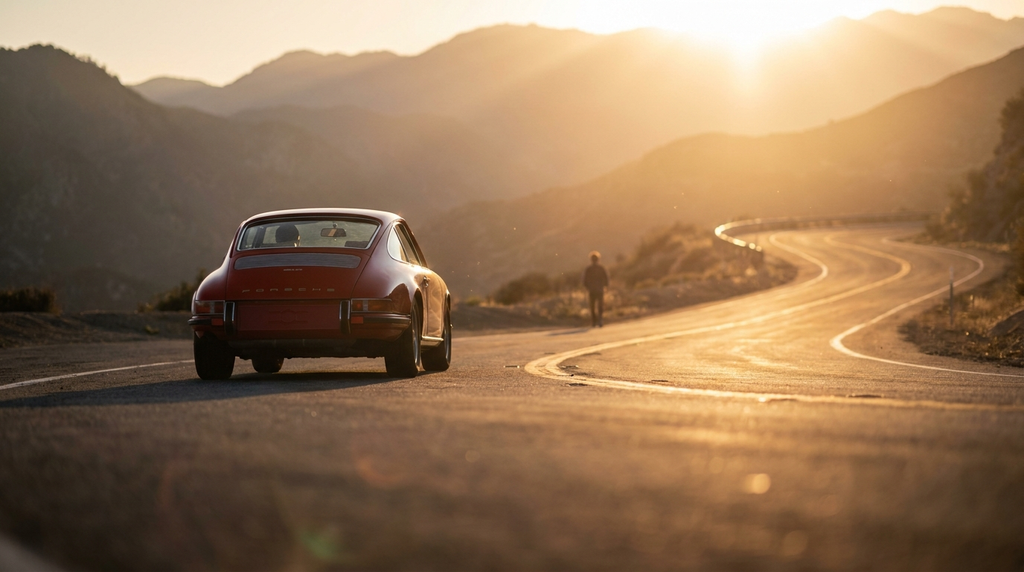
The Car You Wanted
at 20 Is Still Available.
Not the Way
You Expected.
At 20, it was a poster. A screensaver. A car you memorized every specification of but could never touch. At 35, you earn more, understand more, and care more about the engineering than you ever could have at 20. The real car still costs $200,000. But the car on your desk can be exactly right.
There is a specific car that existed in your life before you could afford any car. You know which one. You watched it in a film, or saw it on a track, or passed one on a motorway when you were twelve years old in the back of your parents' car. You did not forget it. It is still there. And the version of it that belongs on your desk costs $32.90 and takes two hours to build.
Every enthusiast
has one.
You know yours.
There is a car that found you before you went looking for it. Not the first car you drove. Not the first car you owned. The first car that made you feel something specific, something that you could not name at the time but recognised immediately as important. You were probably between 12 and 22. The car was almost certainly unattainable. And it has never entirely left.
For some people it was the GT3 RS: the Porsche that felt like a race car with number plates, the one that appeared in every lap record video and every "what would you drive if money didn't matter" conversation. For others it was Han's RX-7 from Fast and Furious: the orange Mazda that made rotary engines and Japanese tuning culture feel like the most exciting thing in the world to a teenager who had never been to a track day. For others it was the E46 M3 GTR, a car so extreme that BMW built a secret V8 specifically to win Le Mans and then sold 10 road versions to comply with homologation rules. These are not cars. They are reference points. They are the cars that told you what kind of person you were going to become.
I had the GT3 RS as my phone wallpaper for about four years. I knew the 0-60 time, the track mode, the PCCB brake option. I'd never sat in one. I still haven't. The model is on my desk. Every day I look at it, I remember being 19., Verified buyer, Reddit
What changes.
What stays.
The same car.
The relationship between an enthusiast and the car they love most changes over the course of a life in ways that are entirely predictable and entirely personal at the same time.
Which one
was yours?
It is still available.
The cars that create this kind of attachment are specific. They are not the most popular cars of their era. They are the ones that carried something extra: a story, a racing history, a cultural moment, a piece of engineering that felt genuinely extraordinary. The ones that made you think about how a car could be rather than just what it was.
Not a model.
A conversation
with your past self.
The 35-year-old who builds a Tourismo Brick GT3 RS on a Tuesday evening is not building a toy. They are doing something that has no clean description but that anyone who has done it recognises immediately: spending two hours in a state of focused attention on the specific object that has represented something important to them for fifteen years. The hands are building a model. The mind is somewhere between the present and the memory of being the person who first cared about this car.
The result is not just a 32cm model on a desk. It is a physical object that represents a continuity between who you were at 20 and who you are now. The taste did not change. The understanding deepened. The model is the evidence that both of those things are true at the same time. People who receive their finished build describe the same feeling: a kind of satisfaction that is different from finishing a work project or completing a run. It is quieter than that. More personal. They tend to put the model somewhere they can see it every day. Not because it is decorative. Because it means something.
I built the E46 GTR. I was 38. I remembered being 16 and watching the ALMS race where it won. I remembered not understanding everything that was happening but knowing it was important. Two hours of building and I was back in both places at the same time. The model is on my desk. I look at it every morning., Verified buyer, Reddit
The build.
The memory.
The desk.
The people who describe their Tourismo Brick build in terms of nostalgia and memory consistently say the same things. The car brought something back. The build created a state they had not been in for a long time. The model on the desk is a daily reminder of something they did not know they still carried.
You know
which one
it should be.
You already know which car belongs on your desk. You have known since you were 19, or 16, or 14. The specific car, the specific colour. The model on the desk is not a consolation prize for not being able to afford the real thing. It is something different: the object that carries the memory of caring about something genuinely and without apology, at an age when that kind of feeling is still uncomplicated.
The real GT3 RS costs more than $200,000. The real E46 GTR, if you can find one of the ten road cars, costs considerably more. Han's RX-7, the actual car from the actual film, sold at auction for figures that would make a grown adult uncomfortable. The Tourismo Brick version of each of these is $32.90. It takes two hours to build. It is pad-printed without a single sticker. It has the clutch power of a precision engineering decision, not a mass-market compromise. It is not the same as the real thing. Nothing is. But it is exactly what belongs on your desk, built by your hands, carrying the weight of a car you never forgot.
You know
which car
it should be.
The car you decided mattered at 20 is available right now at tourismobrick.com. The GT3 RS. The E46 GTR. Han's RX-7. The Audi RS6. $32.90. Two hours. Zero stickers. Permanent on your desk.
Build your car →