
The Internet Hated the Ferrari Luce. Then It Sold for $40M
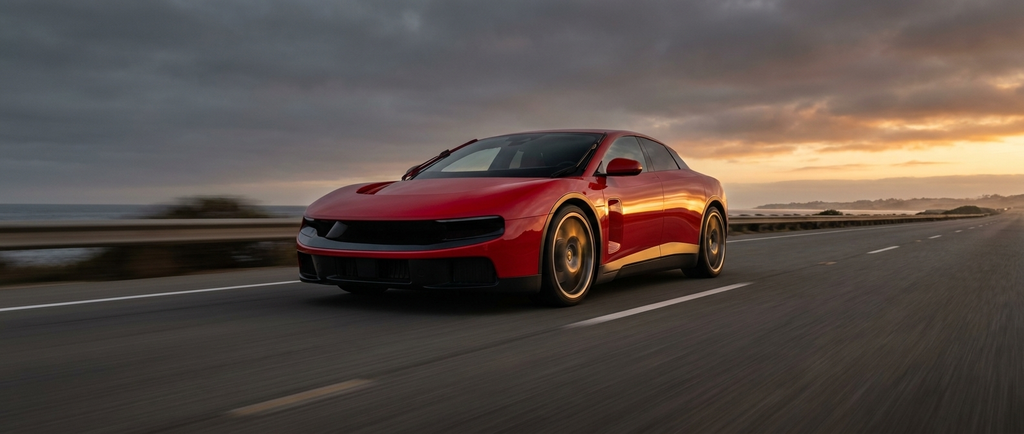
The Internet Said the Luce
Was the Worst Ferrari Ever.
Then Someone Paid
$40 Million for the First One.
Unveiled in May 2026, the Ferrari Luce divided opinion immediately. Its bubble-like design looked nothing like a Ferrari. The stock fell 8% on the day of the reveal. Then, at RM Sotheby's Monterey auction on August 16, Chassis 0 sold for $40 million: 36 times its estimate, 62 times its retail price, and the most expensive new car ever sold at auction. By the Ferrari that everyone said nobody wanted.
There is a category of automotive event that the internet processes badly. It is the category where the opinion of the crowd and the opinion of the market are pointing in opposite directions. The Ferrari Luce belongs to that category. From the day it was unveiled, the comments were clear: wrong design, wrong philosophy, wrong Ferrari. Three months later, the first one sold for forty million dollars. To charity. Without a reserve. Without a buyer's premium. The market said something different from the crowd. It nearly always does.
Wrong shape.
Wrong philosophy.
Wrong Ferrari.
The Ferrari Luce was unveiled at Maranello in May 2026. Ferrari described it as the first fully electric car in the company's history, priced at €550,000, and designed with what the company called a "new formal language" for the electric era. The internet had a different phrase for it. The Luce's design, rounded and upright where Ferraris have always been low and angular, drew immediate and sustained criticism from the community that Ferrari has spent seventy years cultivating.
The criticism focused on three things: the silhouette, which resembled no Ferrari that had ever existed; the decision to make the first Ferrari EV a four-door grand tourer rather than a sports car; and the name, Luce meaning light in Italian, which struck many commentators as too soft for a marque built on a prancing horse and race-winning V12s. The day of the reveal, Ferrari's shares fell more than 8% on the Milan exchange. Analysts cited what they called "design hate" combined with the classic market dynamic of a stock that had risen sharply in anticipation of the launch and then corrected when the product itself appeared.
The market has spoken. Ferrari shares fall after carmaker unveils first fully electric vehicle., Financial Times headline, May 2026
$1.1M estimate.
$40M hammer.
$0 to the seller.
RM Sotheby's ran the Luce Chassis 0 at its annual Monterey sale on the night of August 16, 2026. The car was offered without reserve and the buyer's premium was waived entirely. Every dollar of the hammer price went directly to the Ferrari Foundation's educational initiatives. The pre-sale estimate was $1.1 million. The hammer came down at $40 million.
The context matters. A year earlier, at the same Monterey auction, a one-off Daytona SP3 built beyond the 599-car production run had sold for $26 million, also for the Ferrari Foundation, and had been called the most expensive new car ever sold at auction. The Luce Chassis 0 beat that record by 54% with a car that, when unveiled three months earlier, had caused Ferrari's own stock to fall. The gap between public opinion and collector market opinion is rarely demonstrated this clearly.
One-off paint.
First production unit.
Delivered 2027.
The car that sold for $40 million is not a standard Luce. Chassis 0 is the first production unit of the Luce program and was configured as a fully bespoke Tailor Made model. Its exterior is finished in Madreperla Semi-Gloss, a one-off paint that shifts from green to violet depending on the angle and light conditions. The interior uses Le Mans metallic leather in Perla with Grigio Corvara accents, which Ferrari describes as the first time a Luce interior has replaced black as the primary accent colour.
The wheels are dedicated units, the brake calipers are custom, and a prancing horse finished in optical white appears on both. The car does not yet exist in its final form: the buyer will receive it in early 2027, at which point it will leave Maranello and become the most expensive new car any private buyer has ever purchased at a single auction. The previous record, before the Daytona SP3 set it at $26 million, was also held by a Ferrari. The marque has a habit of being present at the top of these lists regardless of what the comment sections say about its products.
May to August.
From -8% stock
to $40M auction.
The three months between the Luce's unveiling and its Monterey auction result is one of the more compressed reversals of automotive narrative in recent memory. The same car, the same design, the same electric powertrain that caused the stock to fall in May produced the highest auction result for a new car in history in August.
Opinion and value
are not the same.
They never were.
The Luce auction result does not mean the Luce is a good design. The two questions are not connected. A car can produce a record auction result precisely because it is polarising: the collector who paid $40 million was not bidding on the design consensus. They were bidding on the historical significance of owning the first production unit of Ferrari's first electric car. The design controversy is, from that perspective, a feature rather than a defect: it makes the car more historically significant, not less.
The lesson the Luce auction teaches is the same lesson every great polarising automotive reveal has taught. The crowd's opinion on launch day and the market's valuation three months later are different measurements of different things. The crowd is measuring whether the car matches their expectation of what the brand should produce. The market is measuring how rare, how historically significant, and how irreplaceable the specific unit is. Chassis 0 of the first Ferrari EV ever built is all three of those things, regardless of what anyone thinks of the bubble-like bodywork.
Ferrari's first electric car sold for $40 million at RM Sotheby's Monterey auction. More than 36 times its estimate. Every dollar goes to charity., Electrek, August 16, 2026
The Ferrari that
defined the combustion era.
Built by your hands.
The Luce is Ferrari's future. At tourismobrick.com, Ferrari's past is waiting to be built: the Ferrari F1. The car that proved a naturally aspirated V12 at 18,000 rpm was the highest form of automotive engineering ever attempted. 350 precision pieces. On your desk permanently.
Build the Ferrari F1 →